Czech Silver Age, Kutná Hora
Itinerary of the day tour:
History and Interesting Facts
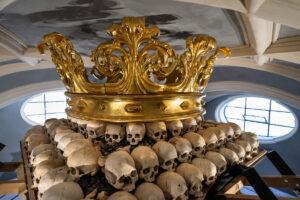
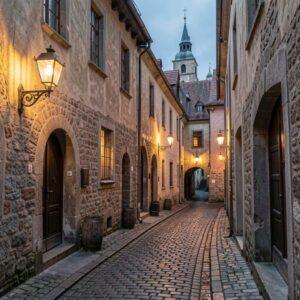
Kutná Hora rose to prominence in the late 13th century after rich deposits of silver were discovered in the surrounding area. The rapid development of silver mining transformed what was once a small settlement into one of the most important cities in the Kingdom of Bohemia. During the Middle Ages, Kutná Hora became a royal city and an economic powerhouse, supplying a large portion of Europe’s silver and playing a crucial role in financing kings, wars, and major construction projects.
Silver mining shaped every aspect of life in Kutná Hora. Thousands of miners worked deep underground in narrow tunnels, often in dangerous conditions, extracting ore by hand using simple tools. The immense wealth generated by the mines led to the construction of grand Gothic buildings, merchant houses, and churches, most notably the Cathedral of Saint Barbara, dedicated to the patron saint of miners. At its peak in the 14th century, Kutná Hora rivaled Prague in size, influence, and importance.
The city was also a center of coin minting, where Prague groschen — one of the most stable and widely used currencies of medieval Europe — was produced. Over time, as silver deposits were exhausted and mining declined, Kutná Hora gradually lost its economic dominance. However, its architectural heritage and historical significance have been preserved, allowing visitors today to walk through its historic streets, explore medieval mines, and experience the story of a city whose rise and fall were deeply tied to the silver hidden beneath the ground.
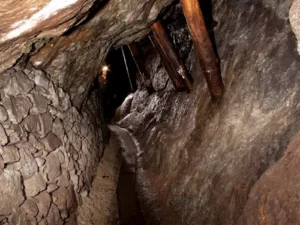
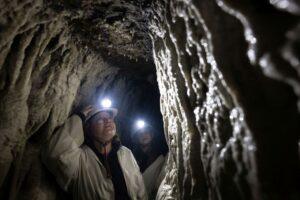
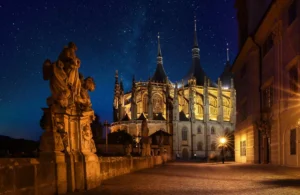
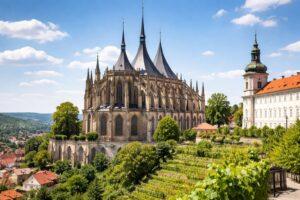
St. Barbara’s Cathedral is one of the most important Gothic churches in Central Europe and the proud symbol of Kutná Hora’s medieval wealth. Construction began in 1388, at a time when the town was flourishing thanks to silver mining, and was funded largely by local miners and wealthy burghers rather than the church or the crown. The cathedral was dedicated to Saint Barbara, the patron saint of miners, whose protection was believed to be essential for those working in the dangerous conditions deep underground.
The cathedral’s architecture reflects both the ambition and the prosperity of the city. Designed by some of the most renowned Gothic architects of the period, including members of the Parler family, the building features soaring vaults, flying buttresses, and richly decorated interiors. Inside, visitors can admire detailed frescoes depicting scenes from everyday medieval life, including mining, coin minting, and religious rituals — a rare visual record of the world that once defined Kutná Hora.
Construction of the cathedral continued for centuries and was repeatedly interrupted by wars, economic decline, and the gradual exhaustion of silver deposits. As the city lost its wealth and influence, the cathedral remained unfinished for a long time, standing as a reminder of Kutná Hora’s former glory. It was finally completed in the late 19th and early 20th centuries, carefully restored in a Neo-Gothic style that respected the original medieval vision. Today, St. Barbara’s Cathedral stands not only as a masterpiece of Gothic architecture, but also as a powerful monument to the miners whose labor built one of Europe’s most remarkable historic cities.